Cao Lầu: The Noodle Dish That Could Only Be Born in Hoi An
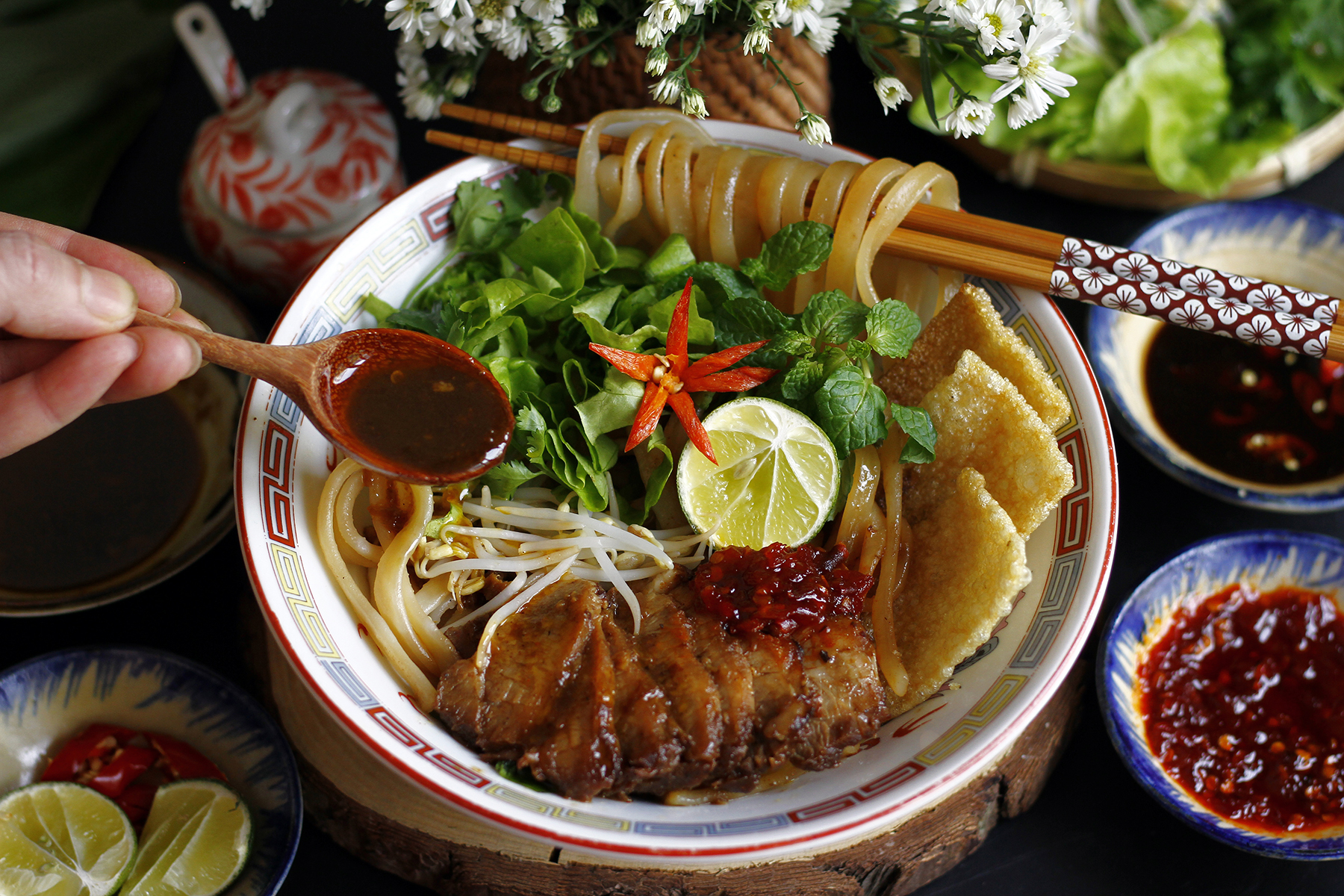
Cao lầu is Hoi An’s signature noodle dish: firm, thick rice noodles served with slices of pork, bean sprouts, fresh greens, crisp crackers and only a little savoury liquid. It is not a bowl of soup. Its character lies in texture — chew against crunch, rich pork against herbs — and in its close connection to the food culture of this central Vietnamese town.
The title of this guide is deliberately careful. “Could only be born in Hoi An” is an editorial description of cultural identity, not a literal claim that the dish cannot be prepared elsewhere. Cao lầu’s identity is inseparable from the town’s streets, cooks and local food memory. That does not mean every bowl must follow one secret formula or that all of its often-repeated origin stories are proven history.
For the wider culinary picture, start with Hoi An Food Guide: What to Eat and the Stories Behind It.
Cao lầu at a glance
What it is Firm rice noodles with pork, greens, bean sprouts, crackers and a small amount of savoury liquid What it is not A broth-heavy noodle soup, phở, or simply another version of mì Quảng Best for A sit-down lunch or dinner when you want one dish strongly associated with Hoi An Main sensory cue Dense, springy noodles balanced by fresh herbs and crisp toppings What to check Whether pork, broth, fish sauce or other animal ingredients fit your dietary needs
What is cao lầu Hoi An?
A typical bowl of cao lầu has five essential elements:
- Thick, firm rice noodles, usually darker or more muted in colour than many Vietnamese rice noodles.
- Sliced pork, often prepared in a sweet-savoury style that may be described locally as xá xíu.
- Fresh leaves and herbs, sometimes with bean sprouts.
- Crisp rice crackers or fried noodle pieces.
- A small amount of concentrated sauce or broth at the base of the bowl.
The dish is assembled, not submerged. Toss it gently before eating so the sauce reaches the noodles, then add chilli or lime only a little at a time. The point is balance, not heat or sweetness alone.
How is cao lầu different from mì Quảng?
Both dishes use rice noodles and relatively little liquid, but they carry different textures and local identities. Cao lầu has thicker, firmer, chewier noodles and is closely associated with Hoi An’s urban food culture. Mì Quảng generally uses flatter noodles, concentrated broth, herbs, peanuts and crisp rice crackers, and belongs more broadly to Quảng Nam and central Vietnam.
Why cao lầu belongs to Hoi An
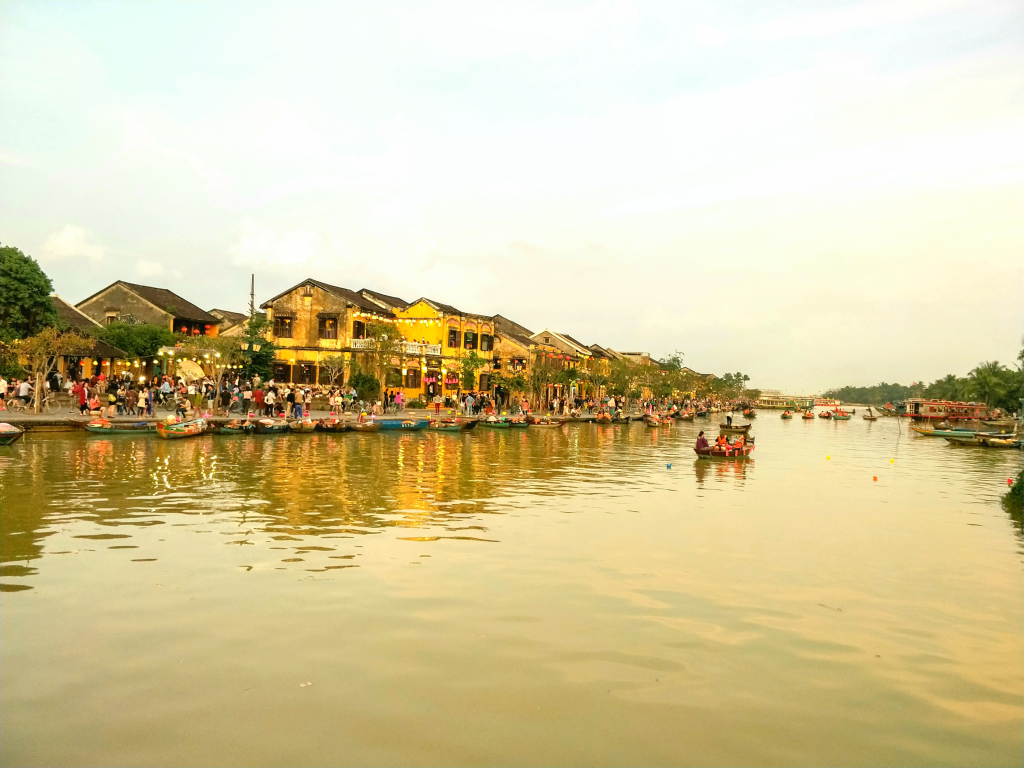
Cao lầu is widely recognised as a signature of Hoi An, and local heritage research treats it as a dish tied to the town rather than the rural communities around it. That association is cultural as well as culinary. People encounter it in the Old Town and surrounding neighbourhoods; it appears in family and specialist-kitchen practices; and it has become part of the way Hoi An presents itself to visitors.
The name itself is often explained through local memory. One interpretation links cao lầu — literally “high floor” or “upper storey” — to merchant-era customers eating above street level while watching activity below. It is an evocative story, but not a conclusion that should be stated as settled historical fact. Like the dish itself, the name carries memory as well as evidence.
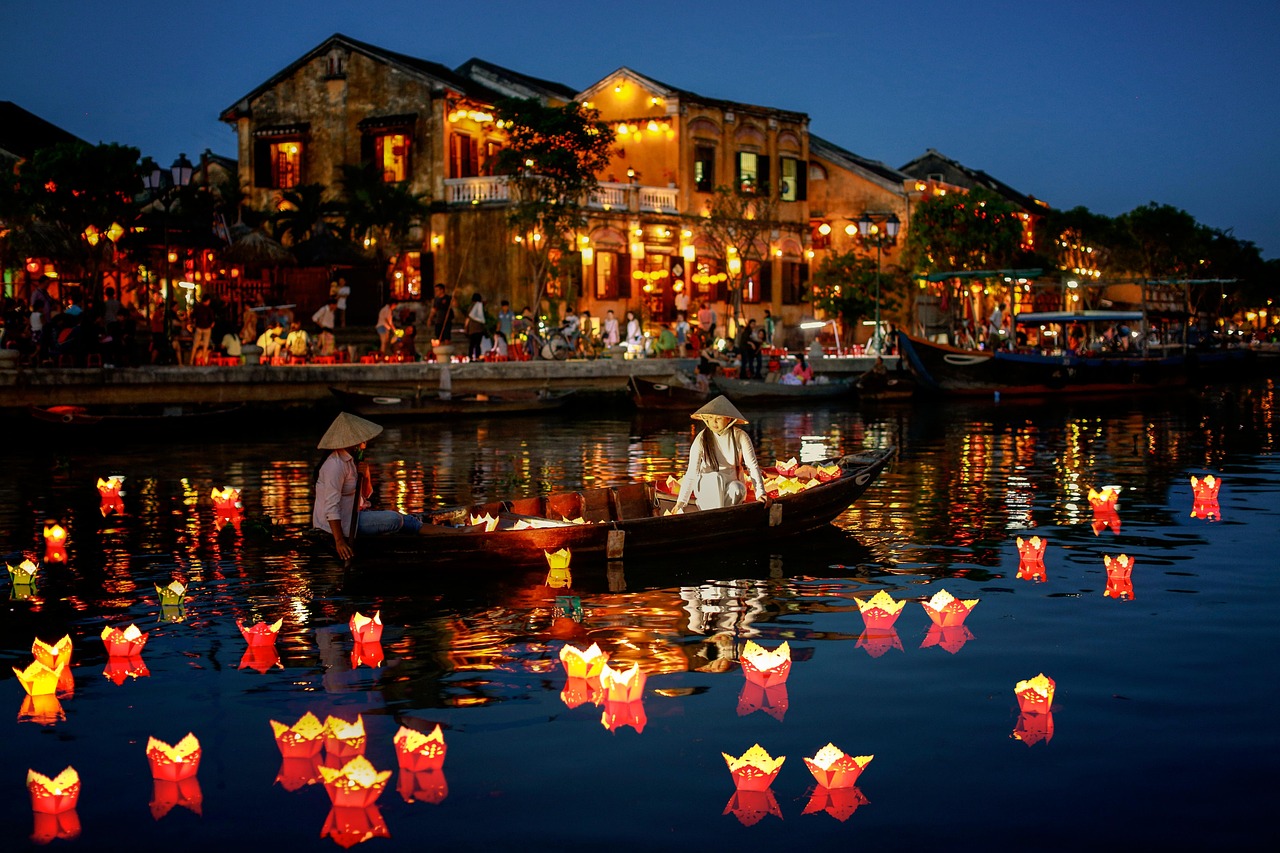
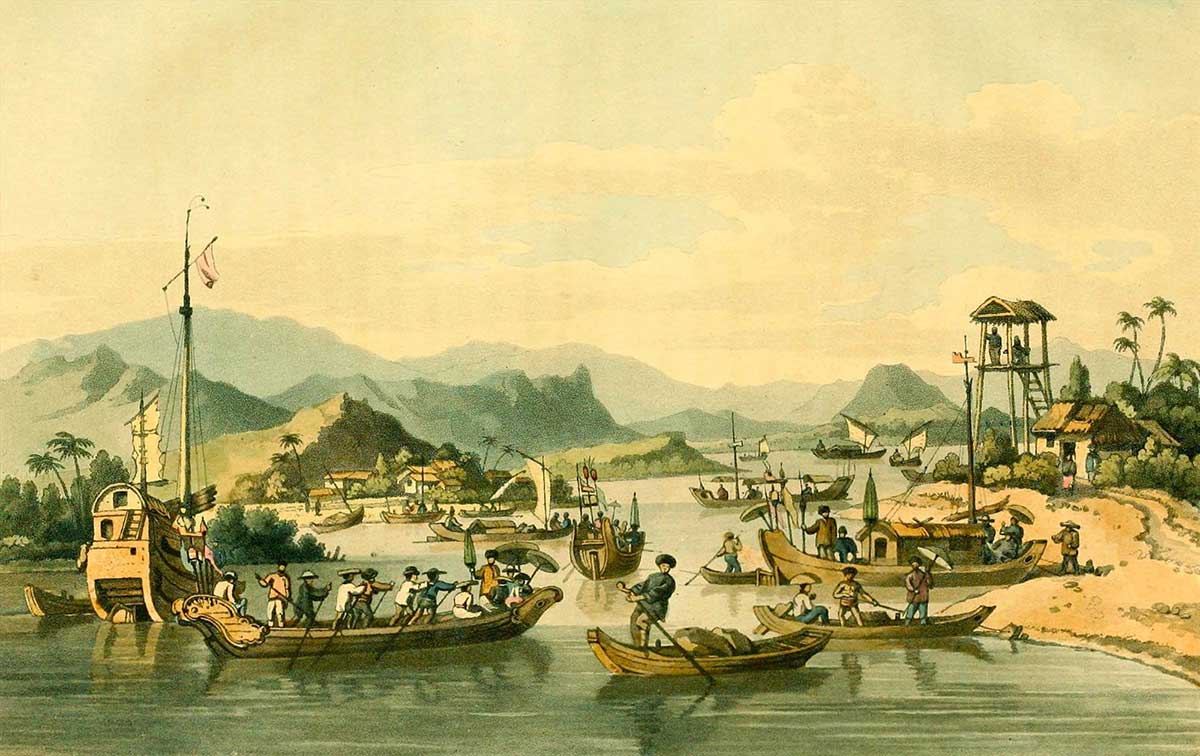
Hoi An was an important Southeast Asian trading port between the fifteenth and nineteenth centuries. UNESCO documents a town shaped by Vietnamese traditions and long interaction with Chinese, Japanese and other overseas communities.[^2] That background makes it reasonable to see cao lầu within a town accustomed to exchange. It does not establish a direct lineage from a Japanese noodle, a Chinese dish or any single external source.
The noodle is the point
The noodles give cao lầu its defining character. They are thicker, firmer and chewier than the soft rice noodles found in many Vietnamese soups. The dish makes sense only when that texture stays intact beside pork, greens and crackers.
Many accounts say that the rice is treated with lye water made using wood ash, a process associated with the noodle’s characteristic firmness. Vietnam Tourism also describes a local tradition connecting the water to Bá Lễ well and the ash to trees from the nearby Cham Islands. This does not make the local tradition meaningless. It shows why good food writing should distinguish a dish’s symbolic geography from a claim that every maker uses identical inputs today.
Fact, local memory and culinary interpretation
- Documented: Cao lầu is closely associated with Hoi An and is defined by unusually firm noodles, pork, greens, crackers and little liquid.
- Local culinary tradition: Bá Lễ well water and ash-derived lye are widely linked to traditional noodle-making.
- Not settled history: Claims that every authentic noodle must use one particular well, a particular island wood, or a single unchanged method.
- Interpretation, not proof: Theories that cao lầu descends directly from Japanese soba or udon, or from one Chinese predecessor.
Bá Lễ well, wood ash and the stories people tell
The Bá Lễ well is part of the cultural landscape around cao lầu. It features in local accounts of water, craft and food identity, and it is often included in visitor narratives about the dish. The story is compelling because it connects something eaten at a table to a particular old well, a process of making alkaline water and a specific town.
But a visitor does not need to turn the well into proof of authenticity. Water chemistry, the source and treatment of ash, rice selection, milling, steaming, drying and the judgement of the noodle maker can all affect a noodle. Some details are household knowledge; some are repeated through tourism; some have changed as conditions, supply chains and regulations have changed.
The most useful response is curiosity. Ask how a particular kitchen makes its noodles if the conversation is welcome. Do not demand access to a private production process or assume that a cook must perform tradition in one prescribed way.
Was cao lầu influenced by Japan or China?
It is common to read that cao lầu is a blend of Japanese, Chinese and Vietnamese influences. The comparison makes intuitive sense: the noodles can look substantial beside Japanese noodle traditions, while the pork may be described through xá xíu, a Vietnamese term related to char siu-style roasting.
Yet resemblance is not the same as documented descent. Hoi An’s port history supports the broader fact of cultural exchange, but it does not by itself prove which cook, recipe or technique produced cao lầu. The Vietnam National Tourism Administration notes that the dish’s exact origin is unknown and presents Japanese and Chinese influence as speculation rather than settled evidence.
A better explanation is more modest and more useful: cao lầu is a Hoi An dish made within a region shaped by Vietnamese practice, Chinese community life, maritime trade and changing local craft knowledge. It can carry traces of exchange without being reduced to a simple “fusion” formula.
For more on the town’s merchant communities and institutions, see The Chinese Assembly Halls (Hội Quán) That Shaped Hoi An’s Community Life after its live CMS canonical URL has been verified.
How to eat cao lầu well
Cao lầu is a complete meal, not a tasting-sized add-on. It is usually best at lunch or dinner, when you have time to sit down and eat it while the noodles retain their texture.
- Mix gently from the bottom so the small amount of sauce coats the noodles.
- Eat noodles, pork, greens and crackers together rather than separating the components.
- Add lime, chilli or extra condiments slowly; the dish should still taste like itself.
- If you are uncertain about portion size, start with one bowl rather than ordering several noodle dishes at once.
- If you do not eat pork or have an allergy, ask clearly about meat stock, fish sauce, cooking fat and toppings before ordering.
How to recognise a well-balanced bowl
A good bowl of cao lầu does not need to follow a single universal formula. Look instead for balance:
- The noodles should be firm and springy, not soft or sticky.
- The pork should bring savoury depth without making the bowl overly sweet.
- Greens and bean sprouts should feel fresh and remain part of the dish, not an afterthought.
- Crackers should add crunch rather than arrive soggy.
- The sauce should coat the noodles lightly; cao lầu should not become a soup.
This is a better guide than looking for claims of a “secret original recipe.” Different kitchens may make practical choices about ingredients and preparation while still producing a thoughtful, satisfying bowl.
Cao lầu and other Hoi An meals
| If you want… | Choose… | Why |
|---|---|---|
| Hoi An’s most iconic noodle dish | Cao lầu | Its firm noodles and local identity make it the clearest starting point. |
| A broader Quảng Nam noodle context | Mì Quảng | It connects Hoi An to the province and central Vietnamese food culture. |
| A rice-based midday meal | Cơm gà Hoi An | It offers a complete plate of chicken, rice, herbs and broth. |
| Small shared dishes in the evening | Bánh bao bánh vạc or hoành thánh | These work well alongside other dishes rather than as a large single meal. |
This comparison is not a ranking. It is a way to choose food according to the kind of meal and context you want.
What visitors should know
Avoid treating a dish as a test of whether Hoi An is “real.” The town’s food culture is alive: families adapt recipes, cooks make practical choices about ingredients, and different customers eat in the same places. A version made today can be meaningful without reproducing every condition imagined from the past.
Practical details are changeable. Individual shops may close, move, change hours or alter their menu. Rather than relying on an old list of “best cao lầu,” check locally on the day, choose a place that fits your location and dietary needs, and give the meal your attention.
If you eat near the market or in a small family-run place, keep paths clear, ask before photographing people at work and avoid bargaining aggressively over low-cost food. Those small actions matter more than performing expertise about a dish’s origin.
Frequently asked questions
What is cao lầu?
Cao lầu is a Hoi An noodle dish made with firm rice noodles, pork, fresh greens, bean sprouts, crisp crackers and a small amount of savoury liquid. It is drier and chewier than a typical Vietnamese noodle soup.
Why is cao lầu associated with Hoi An?
Cao lầu is closely identified with Hoi An’s urban food culture. Local stories connect its noodle-making to Bá Lễ well water and wood ash, while its exact origins and the extent of foreign influences remain uncertain.
How is cao lầu different from mì Quảng?
Both are central Vietnamese rice-noodle dishes with relatively little broth, but cao lầu has thicker, firmer noodles and is especially associated with Hoi An. Mì Quảng belongs more broadly to Quảng Nam and central Vietnam.
When should I eat cao lầu in Hoi An?
Cao lầu works well as a lunch or dinner. Check current opening hours locally, as individual specialist shops may keep different schedules.
Continue exploring
- Hoi An Food Guide: What to Eat and the Stories Behind It
- Cơm Gà Hoi An and the Town’s Chinese-Vietnamese Kitchens
- Hoi An’s Market and Street Food, Meal by Meal
- Hoi An as an International Trading Port, 15th–19th Century
Fact-check log
| Item | Status | Source type | Last verified |
|---|---|---|---|
| Cao lầu as a signature Hoi An dish and its contrast with mì Quảng’s wider Quảng Nam association | Confirmed as local heritage interpretation | Hoi An Heritage Authority research article | 14 August 2026 |
| Core composition: firm noodles, pork, greens, bean sprouts, crackers and little liquid | Confirmed across official/national tourism sources | Vietnam National Authority of Tourism; Vietnam National Tourism Administration | 14 August 2026 |
| Hoi An’s fifteenth-to-nineteenth-century international-trading-port context | Confirmed | UNESCO World Heritage Centre | 14 August 2026 |
| Bá Lễ well and wood-ash/lye association | Confirmed as a widespread local culinary tradition; wording qualified because practice can vary | Vietnam National Authority of Tourism; Vietnam National Tourism Administration | 14 August 2026 |
| Current universal use of Bá Lễ water or Cham Islands wood ash by all noodle makers | Not confirmed; article explicitly avoids this claim | Vietnam National Tourism Administration reporting documents variation | 14 August 2026 |
| Direct Japanese or Chinese origin of cao lầu | Not confirmed; article treats these as interpretation/speculation | Vietnam National Tourism Administration | 14 August 2026 |
| Current restaurant recommendations, opening hours, prices, recipes and production access | Excluded from evergreen body; require fresh local verification before publishing recommendations | Operational local research required | 14 August 2026 |
: Hoi An World Cultural Heritage Conservation Center, “Cao lầu phố Hội,” 18 June 2023, https://hoianheritage.danang.gov.vn/vi/trao-doi-chuyen-nganh/chuyen-de-nghien-cuu-trao-doi/cao-lau-pho-hoi-1137.html
[^2]: UNESCO World Heritage Centre, “Hoi An Ancient Town,” https://whc.unesco.org/en/list/948/
[^3]: Vietnam National Authority of Tourism, “Explore the food of Hoi An,” https://vietnam.travel/things-to-do/explore-food-hoi-an
: Vietnam National Tourism Administration, “Cao Lau, One Of Viet Nam’s Greatest Culinary Treasures,” 25 September 2014, https://vietnamtourism.gov.vn/en/post/7813