Cơm Gà Hoi An and the Town's Chinese-Vietnamese Kitchens
Cơm gà Hoi An is a chicken-rice meal built around yellow rice, shredded seasoned chicken, fresh herbs, pickles and a small bowl of light soup or broth. It is simple to describe but carefully balanced to eat: warm rice carries the flavour of chicken stock, while herbs, onion, sour vegetables and chilli bring freshness and contrast.
If you search without Vietnamese diacritics, you may see it written as com ga Hoi An. The phrase “Chinese-Vietnamese kitchens” in this title needs care. It refers to Hoi An’s wider historical food landscape — a town shaped by Vietnamese cooking, Chinese community life and maritime exchange — not to a proven claim that cơm gà Hoi An came from one Chinese source or one unchanged lineage. The dish is best understood as a local Hoi An meal within a wider Southeast Asian family of chicken-rice dishes.
For the wider culinary picture, start with Hoi An Food Guide: What to Eat and the Stories Behind It.
Cơm gà Hoi An at a glance
What it is Yellow rice cooked with chicken stock, shredded seasoned chicken, herbs, pickles and usually a light soup or broth Best time to eat it A relaxed lunch; many places also serve it later, but opening hours vary What makes it distinctive The contrast of fragrant rice, shredded chicken, rau răm, onion, sour vegetables and chilli-based condiments What it is not A single fixed recipe or a simple copy of Hainanese chicken rice Dietary note It is centred on chicken; confirm broth, fish sauce and cooking fat if you have dietary restrictions
What is cơm gà Hoi An?
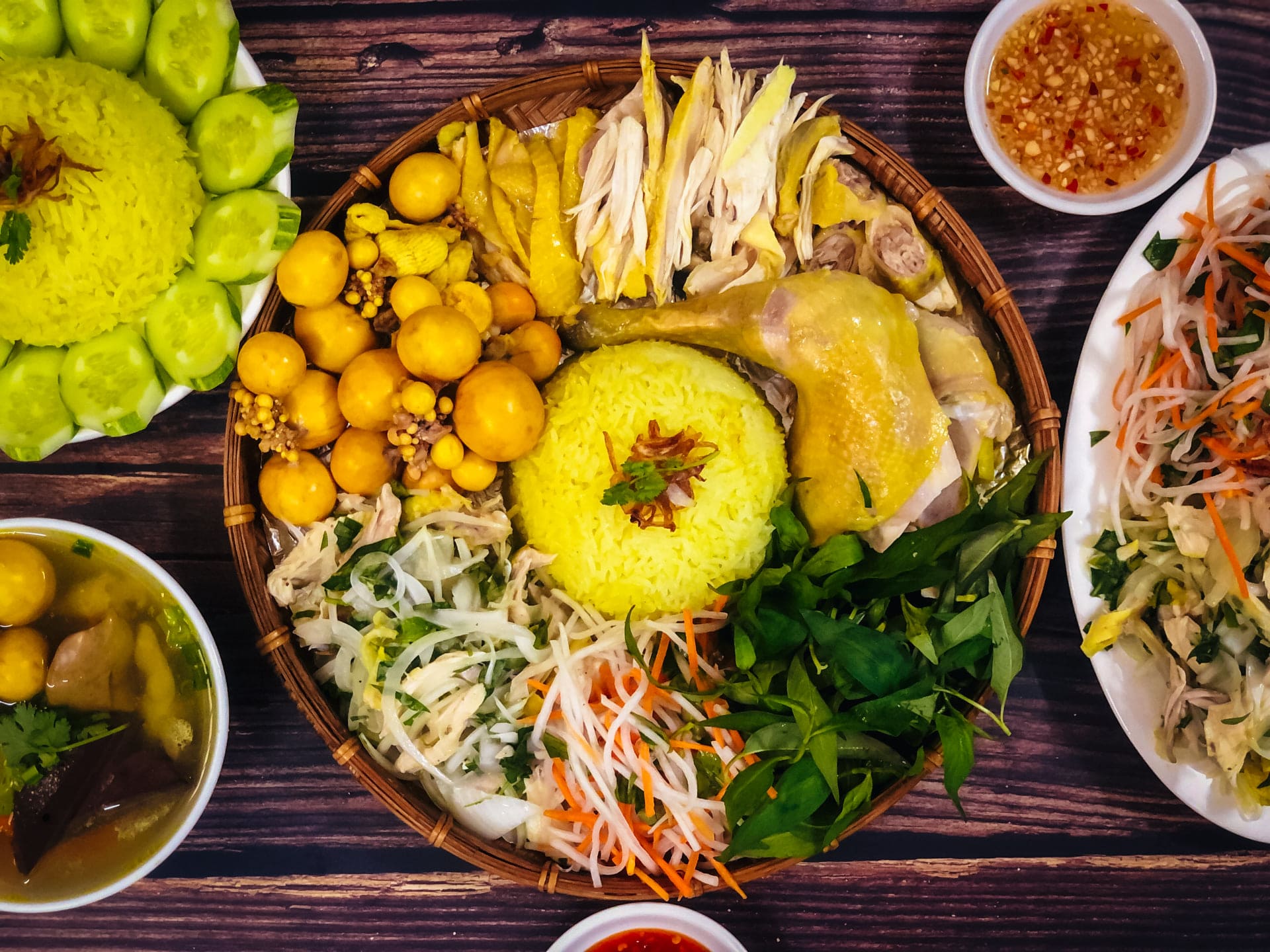
A typical plate begins with rice cooked in chicken stock and coloured yellow with turmeric. On top sits chicken that has been poached, shredded and mixed with ingredients such as sliced onion, rau răm — Vietnamese coriander — and seasoning. It is commonly served with a small bowl of soup or broth, chilli condiment and pickled vegetables such as shredded papaya and carrot.
The details vary from one kitchen to another. Some cooks emphasise the fragrance and texture of the rice; others make the chicken mixture more tangy, peppery or chilli-forward. That variation is part of the dish’s character. Cơm gà Hoi An is not defined by a single identical plate but by the relationship between rice, chicken, herbs, acidity and a supporting broth.
Vietnam Tourism describes the dish through this same essential structure: shredded chicken with onion or scallion over yellow rice cooked with turmeric and chicken broth, accompanied by greens and herbs.
Why cơm gà Hoi An tastes different
The defining feature is balance. The rice is not a neutral side dish: cooking it with chicken stock gives each grain aroma and savoury depth. Turmeric adds colour, but a good plate should not taste only of turmeric. The shredded chicken is then made brighter with herbs, onion and sometimes citrus or chilli, while pickles add a clean sour note.
Rau răm is particularly important to the local profile. Its peppery, slightly resinous flavour is different from mint or cilantro, and it stops the meal from becoming too rich. A light soup made from chicken cooking liquid can bring the meal together without turning it into a bowl of broth.
The visual identity matters too. A familiar plate brings together yellow rice, pale slices of onion, green rau răm, red chilli sauce and scattered black pepper. Hoi An heritage material uses this combination to evoke the dish’s immediately recognisable colour, aroma and contrast of flavours.
The dish is also a reminder that food is organised through labour. Good chicken rice requires choosing and cooking chicken, preparing stock, managing rice texture, shredding and seasoning meat, washing herbs and making pickles. The apparent ease of a plate reflects many small acts of preparation rather than a single “secret” ingredient.
How to recognise a well-balanced plate
A satisfying plate does not need to match one universal recipe. Look for balance instead:
- Rice should be fragrant and separate enough to hold its texture, not greasy or clumped.
- Chicken should be tender but still have character, with seasoning that supports rather than hides it.
- Rau răm, onion and other herbs should taste fresh.
- Pickles should add brightness, not overwhelm the dish with sugar or vinegar.
- The accompanying soup should feel light and savoury, not obligatory filler.
This is more useful than searching for claims that one kitchen alone is “the original.” Hoi An’s food culture is alive, and cooks make different practical choices while still producing recognisably local food.
A chicken-rice dish in Southeast Asia
Chicken and rice appear together in many food traditions across Southeast Asia. Vietnam Tourism links cơm gà Hoi An to a wider family of dishes that includes versions in Malaysia, Singapore and Thailand, and notes the role of Hainanese chicken rice in that regional story.
That context is valuable, but it needs limits. A shared regional pattern does not establish a direct, one-way line from Hainan — an island province in southern China — to every Hoi An plate. Chicken, rice, herbs, stock and pickles can be adapted in many kitchens over generations. Local cooks turn common ingredients into a meal with a particular taste, rhythm and social setting.
In Hoi An, the dish has its own clear grammar: yellow rice, shredded and seasoned chicken, rau răm, onion, sour accompaniments, chilli and broth. That grammar is what visitors should pay attention to. It explains more about the experience of eating cơm gà Hoi An than a tidy but unproven origin story.
Hainanese chicken rice and the Hoi An version
Hoi An heritage material distinguishes cơm gà Hải Nam as chicken rice made in the style of the Hainanese community from the Hoi An plate commonly recognised today. The comparison is useful because it shows both connection and difference: chicken rice travelled widely through Southeast Asia, but local dishes were adapted through local ingredients, tastes and serving habits.
In Hoi An, shredded chicken is central to the meal, while yellow stock-cooked rice, rau răm, onion, chilli and pickles create a more layered plate. This is not evidence of a single direct origin. It is a reminder that regional food traditions move, change and become local in different ways.
Fact, context and interpretation
- Documented: Hoi An was a Southeast Asian trading port active from the fifteenth to nineteenth centuries, shaped by indigenous, Chinese, Japanese and later European influences.
- Documented: Cơm gà Hoi An is a locally recognised chicken-rice dish built around yellow stock-cooked rice, shredded chicken, herbs and accompaniments.[^2]
- Useful regional context: Chicken-rice dishes have many variants across Southeast Asia, including traditions associated with Hainanese chicken rice.
- Not established: A direct, exclusive Chinese or Hainanese origin for cơm gà Hoi An, or one unchanged recipe shared by all local kitchens.
Chinese-Vietnamese kitchens: context, not a single origin story
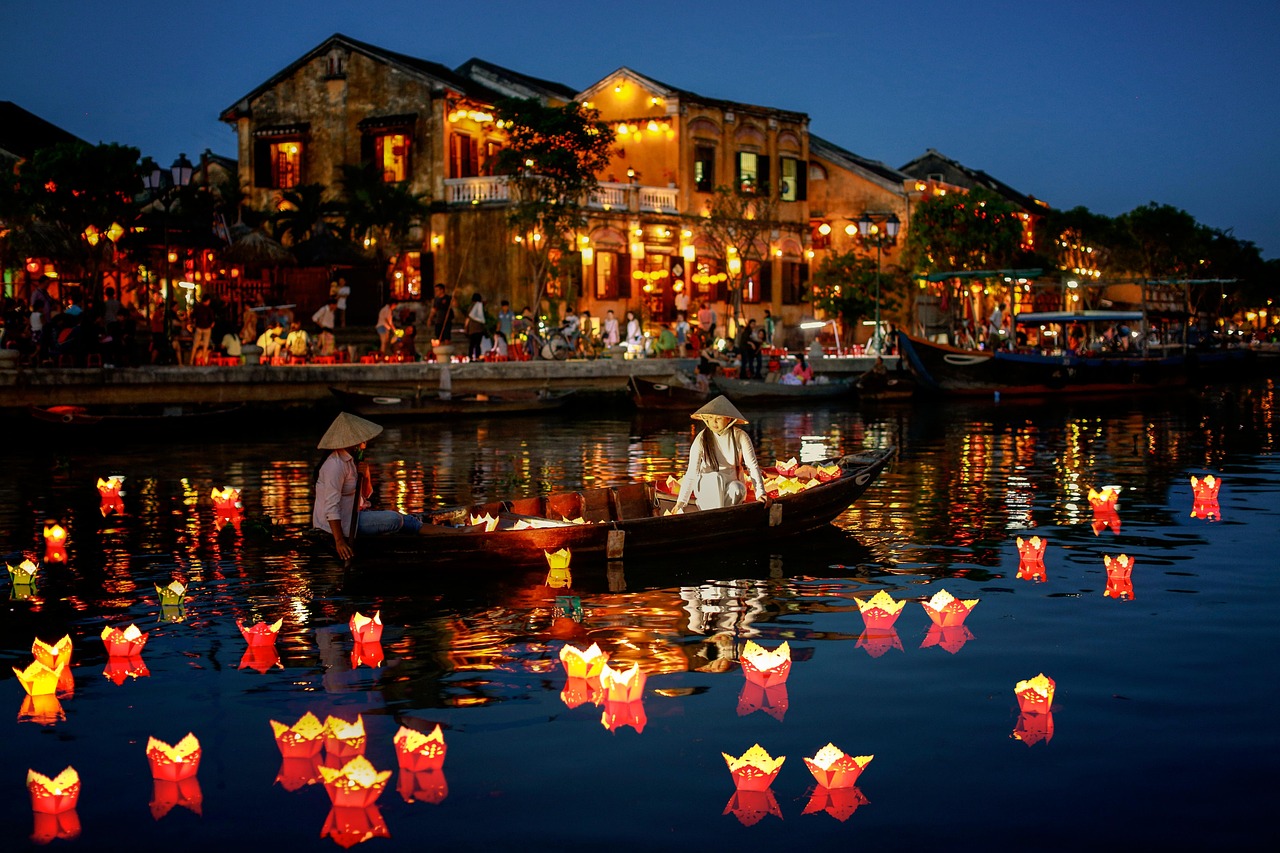
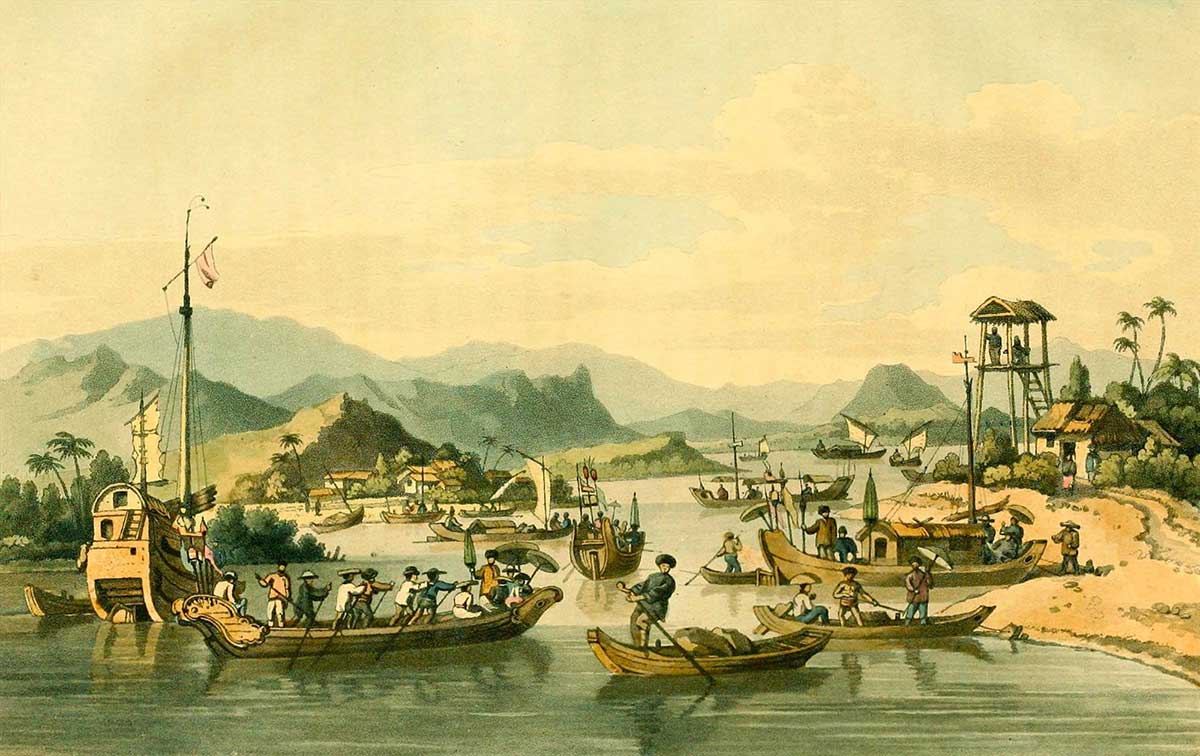
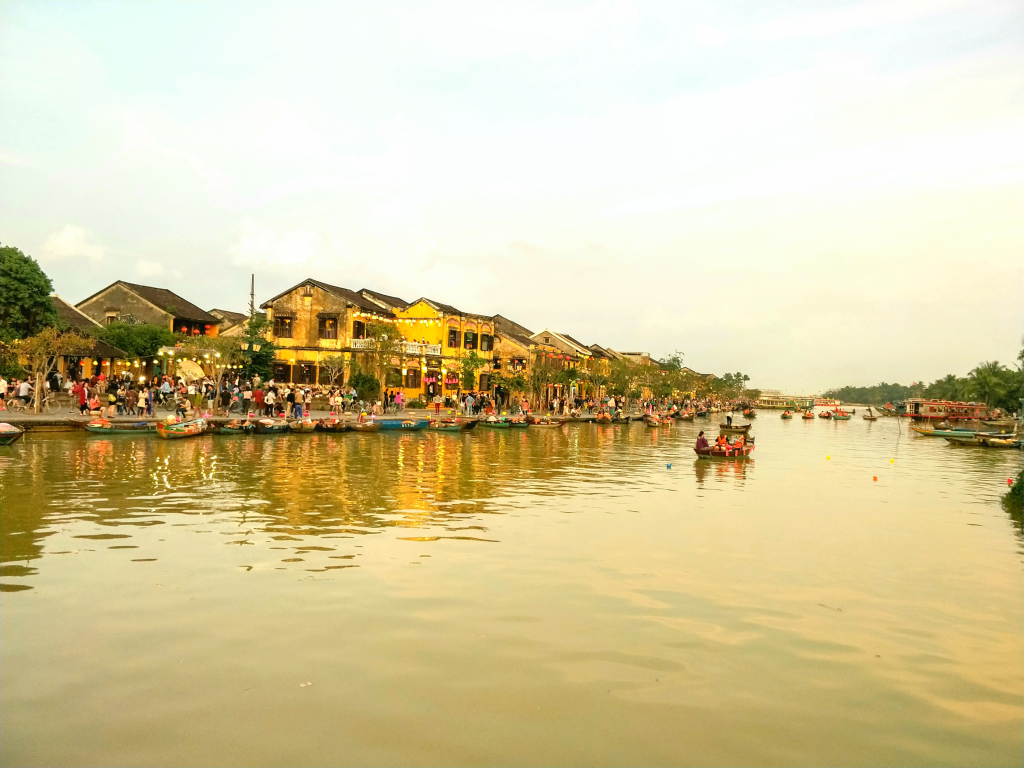
Hoi An’s connection with Chinese communities is historically significant. UNESCO describes the Old Town as a trading-port landscape shaped by a fusion of indigenous and foreign cultures, principally Chinese and Japanese with later European influences. Its assembly halls, merchant houses, market and riverfront show that commerce, family life, belief and food were not separate worlds.
That setting helps explain why Chinese-Vietnamese food history is a useful lens for the town. Ingredients, techniques, people and ideas circulated through commercial networks and neighbourhood life. Yet it would be careless to claim that this context alone proves the source of cơm gà Hoi An.
The most accurate reading is layered. Vietnamese and Quảng Nam cooking practices provide the immediate local ground: rice, herbs, chicken, pickles, fish sauce and chilli. The historical presence of Chinese merchant communities and wider maritime connections form part of the town’s cultural environment. Modern restaurants and family kitchens continue to adapt the meal for residents and visitors. These layers overlap, but they are not one simple origin story.
For more on the institutions that supported Chinese community life in the town, see The Chinese Assembly Halls (Hội Quán) That Shaped Hoi An’s Community Life after its live CMS canonical URL has been verified.
From market meals to family food businesses
Cơm gà works well as a midday meal because it is complete without being cumbersome: rice for substance, chicken for savoury depth, herbs and pickles for freshness, and a little soup to round it out. It can be served quickly, but it is not necessarily fast food. The chicken, stock and accompaniments all require preparation before a customer sits down.
Cơm gà does not belong only to restaurants. Hoi An heritage material records the dish within the town’s street-vending and pavement-selling landscape, while another heritage bulletin places it alongside food sold in the evening riverfront economy.[^6] This helps place chicken rice within an everyday urban food infrastructure: mobile and family-run in some settings, more settled in others, and shaped by the practical rhythms of cooking, selling and eating in the town.
Many Hoi An food traditions have moved between markets, street-side stalls, homes and small restaurants. Vietnam Tourism recounts one well-known family story of Cơm Gà Bà Buội, whose founder sold chicken rice from a market stall before the business was continued by later generations. This is a useful example of how food knowledge may become a family livelihood. It should not be used as a permanent endorsement, a ranking or proof that one restaurant represents the only authentic version.
When you choose a small family-run place, notice the rhythm of work as well as the plate: rice being portioned, herbs prepared, bowls of soup carried out, regular customers arriving. Do not block entrances, expect extensive customisation in a busy service period, or treat staff and diners as scenery for photographs.
How to eat cơm gà Hoi An well
Cơm gà is usually best eaten as a whole plate. Take a little rice, chicken, herbs and pickles in the same bite, then use the soup between mouthfuls. Add chilli gradually, particularly if the condiment is house-made and stronger than expected.
- Taste the rice and chicken before adding sauce or chilli.
- Mix a little onion and rau răm through the chicken if they are served separately.
- Use pickles to refresh the palate, not as a replacement for the main dish.
- Sip the soup as part of the meal rather than pouring it all over the rice unless the kitchen indicates that is its local style.
- Ask clearly about chicken stock, fish sauce and cooking fat if you have dietary restrictions.
| If you are… | A practical choice |
|---|---|
| Eating alone | Order one standard plate first; it is designed as a complete meal. |
| Sharing with others | Add one small dish only after deciding how hungry everyone is. |
| Travelling with children | Request chilli separately and start with rice, chicken and mild broth. |
| Avoiding chicken | Choose another dish rather than expecting a vegetarian version of a chicken-centred meal. |
| Managing an allergy | Explain it clearly, ideally with Vietnamese translation, and confirm broth, sauces and garnishes. |
What visitors should know
Avoid judging cơm gà by whether it resembles chicken rice you have eaten elsewhere. Its value lies in the Hoi An arrangement of ingredients and in the meal’s place within everyday food life, not in passing a test of historical purity.
Practical details change. Individual stalls and restaurants may move, close, alter their hours or change their menu. Do not build an itinerary around a decade-old “best cơm gà” list. Check current local information on the day, choose a place that fits your location and dietary needs, and eat with enough time to notice the meal.
The Old Town remains a working commercial and residential place. Keep doorways and narrow pavements clear, ask before photographing cooks or customers, and avoid bargaining aggressively over low-cost food. Respect is not an extra layer added after eating; it shapes the experience itself.
Frequently asked questions
What is cơm gà Hoi An?
Cơm gà Hoi An is a chicken-rice meal with turmeric-yellow rice cooked in chicken stock, shredded seasoned chicken, herbs, pickled vegetables and often a light soup or broth alongside.
Is cơm gà Hoi An the same as Hainanese chicken rice?
No. They belong to a wider Southeast Asian family of chicken-rice dishes, but cơm gà Hoi An has its own local balance of shredded chicken, yellow rice, herbs, pickles and chilli-based accompaniments. A direct single-line origin is not established.
When should I eat cơm gà in Hoi An?
It is especially well suited to lunch, though many places also serve it later in the day. Check current hours locally because individual restaurants and stalls vary.
Can I order cơm gà Hoi An without chicken?
The dish is built around chicken, so it is not naturally vegetarian. Ask for a different rice or noodle dish if you do not eat chicken, and confirm whether broth, fish sauce or meat-based cooking fat is used.
Continue exploring
- Hoi An Food Guide: What to Eat and the Stories Behind It
- Cao Lầu: The Noodle Dish That Could Only Be Born in Hoi An
- Learning to Cook Hoi An Food: Classes Worth Taking
- Hoi An’s Market and Street Food, Meal by Meal
- Hoi An as an International Trading Port, 15th–19th Century
Fact-check log
| Item | Status | Source type | Last verified |
|---|---|---|---|
| Core composition of cơm gà Hoi An: yellow turmeric-and-stock rice, shredded chicken, herbs and accompaniments | Confirmed across national tourism and Vietnamese travel reporting | Vietnam National Authority of Tourism; VnExpress Travel | 14 August 2026 |
| Cơm gà as part of a wider Southeast Asian family of chicken-rice dishes | Confirmed as regional culinary context | Vietnam National Authority of Tourism | 14 August 2026 |
| Distinction between cơm gà Hải Nam and the Hoi An version, including Hoi An’s use of shredded chicken | Confirmed as local heritage description; use for comparison, not to assert direct descent | Hoi An Heritage Authority bulletin | 14 August 2026 |
| Sensory description of yellow rice, rau răm, onion, chilli sauce and pepper | Confirmed as local heritage description | Hoi An Heritage Authority bulletin | 14 August 2026 |
| Cơm gà in Hoi An’s street-vending, pavement and riverfront food landscape | Confirmed as local heritage planning/bulletin context; no fixed present-day locations or hours included | Hoi An Heritage Authority | 14 August 2026 |
| Hoi An as a fifteenth-to-nineteenth-century trading port, including Chinese community context | Confirmed | UNESCO World Heritage Centre | 14 August 2026 |
| Direct, exclusive Hainanese or Chinese origin for cơm gà Hoi An | Not confirmed; article deliberately does not assert it | Further primary culinary-history research needed | 14 August 2026 |
| Cơm Gà Bà Buội market-stall/family-continuity account | Attributable tourism narrative; used only as an illustrative example, not a current endorsement or exclusive-authenticity claim | Vietnam National Authority of Tourism | 14 August 2026 |
| Current restaurant recommendations, opening hours, prices, recipes and family ownership | Excluded from evergreen body; require fresh local verification before publication or future recommendations | Operational local research required | 14 August 2026 |
: Vietnam National Authority of Tourism, “4 ‘Must-Try’ Dishes in Hoi An,” https://vietnam.travel/things-to-do/4-must-try-dishes-in-hoi-an
[^2]: VnExpress Travel, “Cơm gà Hội An, món ngon khó chối từ,” 9 February 2014, https://vnexpress.net/com-ga-hoi-an-mon-ngon-kho-choi-tu-2942862.html
: Hoi An World Cultural Heritage Conservation Center, “Bảo tồn di sản,” bulletin 2, 2017, https://hoianheritage.danang.gov.vn/uploads/download/files/ban-tin-2-2017.pdf
: Hoi An World Cultural Heritage Conservation Center, “Bảo tồn di sản,” bulletin 1, 2019, https://hoianheritage.danang.gov.vn/uploads/download/files/ban-tin-1-2019.pdf
: UNESCO World Heritage Centre, “Hoi An Ancient Town,” https://whc.unesco.org/en/list/948/
[^6]: Hoi An World Cultural Heritage Conservation Center, “Đề án bố trí buôn bán hàng rong, vỉa hè trong khu phố cổ Hội An,” 12 December 2016, https://hoianheritage.danang.gov.vn/vi/laws/detail/De-an-Bo-tri-buon-ban-hang-rong-via-he-trong-khu-pho-co-Hoi-An-9.html?download=1&id=0