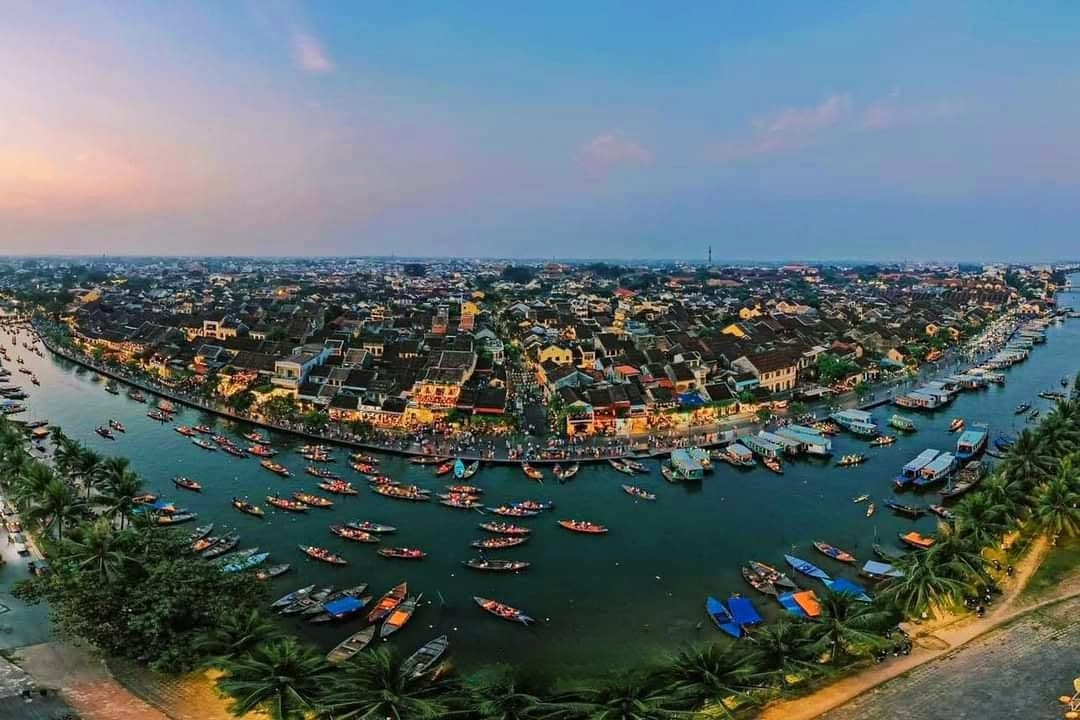
Hoi An Ancient Town: The Buildings Behind Its Trading Port
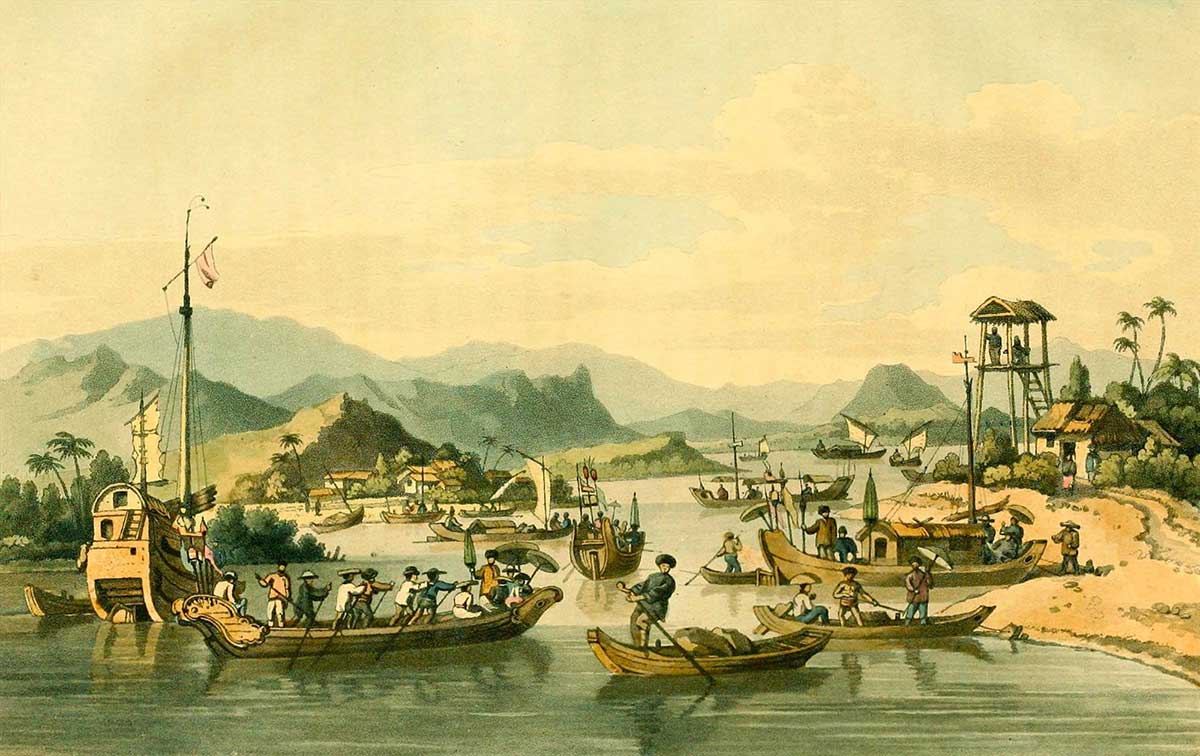
Hoi An is not simply an old quarter with attractive wooden façades. Its merchant houses, assembly halls, bridge, market and riverfront form a compact record of how a Southeast Asian port worked. UNESCO describes Hoi An as an exceptionally well-preserved trading port dating from the fifteenth to nineteenth centuries, with a historic fabric of 1,107 timber-frame buildings, commercial and domestic structures, a market, ferry quay and religious buildings.
The most useful way to explore the Old Town is to read its architecture as evidence. A narrow house facing a busy street, an altar room behind it, a storehouse near a riverside opening, or a community hall around a courtyard all reveal the relationships between trade, family life and belief.
Merchant houses: shops, homes and warehouses
The best-known old houses—such as Tấn Ký, Phùng Hưng, Đức An and Quân Thắng—were working merchant properties, not detached monuments. UNESCO identifies Hoi An’s surviving building stock as a mix of commercial and domestic vernacular structures, usually built with timber frames, brick or wooden walls and tiled roofs.
Their narrow street façades made efficient use of valuable commercial frontage. Their deep plans connected public shop or reception space to family rooms, ancestor worship, household work and storage. Some had access towards the river as well as the main street, reflecting a town that moved goods between water and shopfront.
A typical visit becomes more meaningful when you ask: what did this building allow its owners to do? It allowed a family to trade, receive clients, protect stock, live together and maintain ancestral worship within one property.
Assembly halls: community infrastructure
The Chinese assembly halls, known in Vietnamese as hội quán, were institutions as well as buildings. Hoi An has five principal halls associated with Chinese communities from Fujian, Guangdong, Chaozhou, Hainan and the broader Chinese community. Their documented role was to provide places where members met, exchanged commercial information, supported one another, observed annual rites and worshipped according to community beliefs.
They should not be understood simply as decorative “Chinese-style” attractions. Their gates, courtyards, altars and carved interiors show the communal infrastructure that enabled overseas merchants to live and work far from their home regions. They are also active religious spaces. Keep voices low, avoid blocking altars or offerings, and ask before photographing worshippers or private ritual activity. For a full guide to these halls, see The Chinese Assembly Halls (Hoi Quan) That Shaped Hoi An's Community Life.
Chùa Cầu: a bridge between quarters
At the western end of Trần Phú Street, Chùa Cầu—the Japanese Covered Bridge—makes Hoi An’s international history visible in one small structure. Hoi An’s heritage centre connects its early-seventeenth-century construction to the Japanese trading community and describes it as a crossing between the Japanese and Chinese quarters.
The bridge is also a shrine. This combination of crossing and sacred space is why it should be seen as more than a photo stop: port infrastructure, worship and neighbourhood life were closely connected.
The river, quay and market
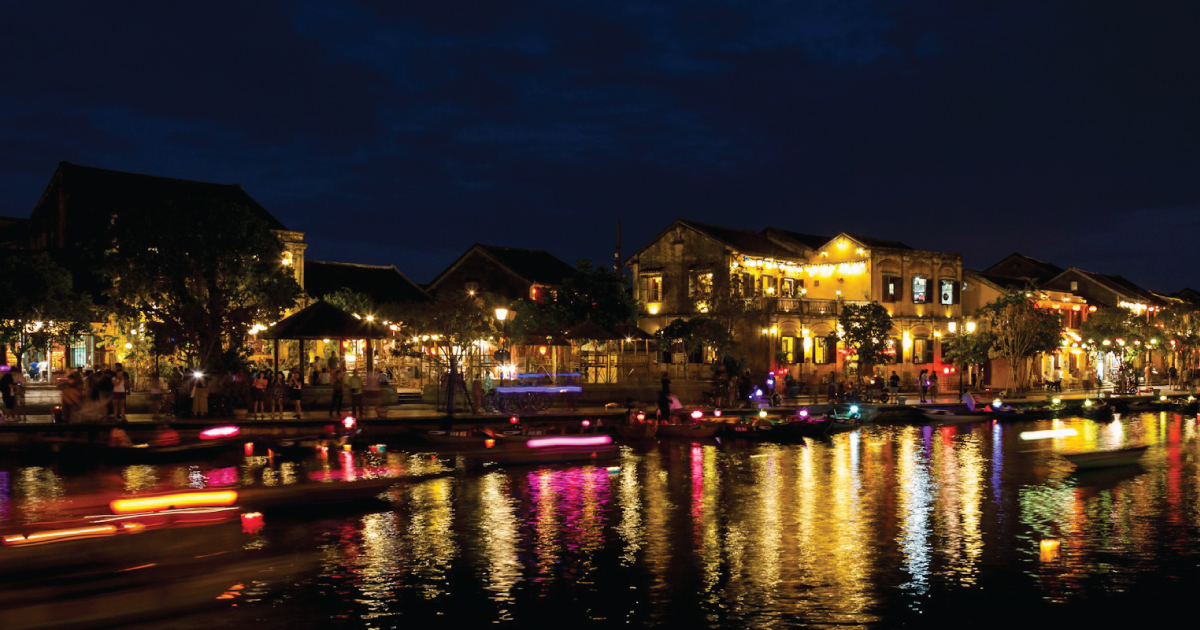
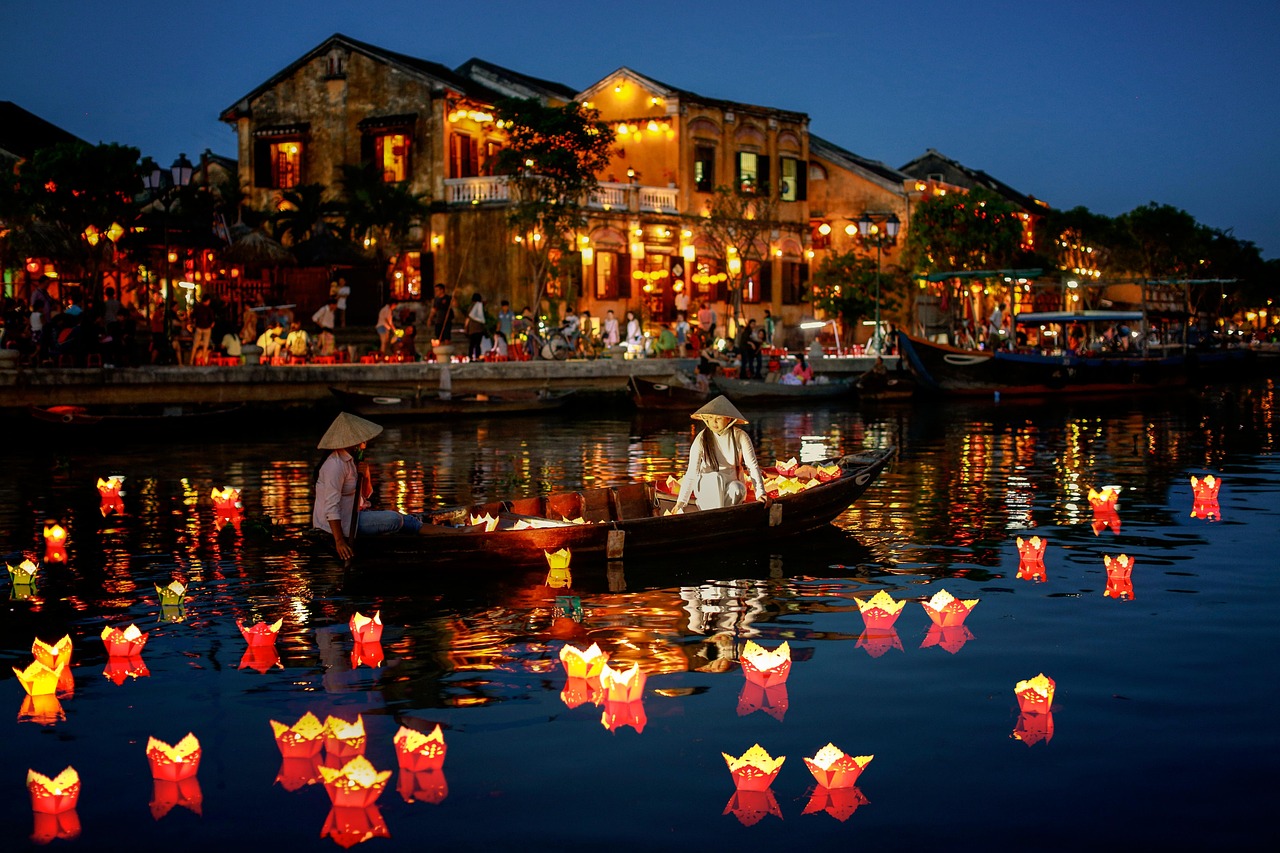
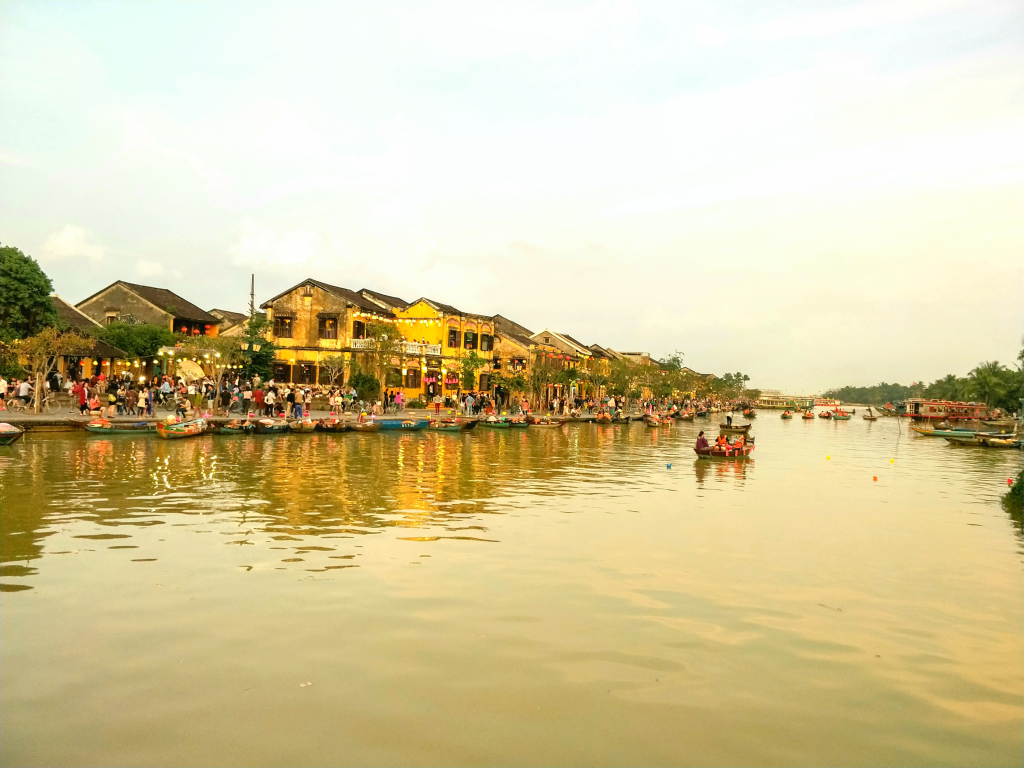
Hoi An’s plan only makes full sense with the Thu Bồn river in view. UNESCO specifically includes the open market and ferry quay within the historic property’s building complex. Streets handled retail and social contact, while the river connected the town to inland products, coastal routes and overseas shipping.
The market and riverside are therefore part of the port story, not modern extras. A walk from Trần Phú Street through the market to Bạch Đằng Street helps explain why merchant houses were oriented to both streets and water.
How to read the Old Town well
Rather than trying to enter every monument, choose a small group with distinct roles:
- One merchant house, to understand the relationship between shop, home, altar and storage.
- One assembly hall, to understand community institutions and worship.
- Chùa Cầu, to understand the connection between trading quarters.
- One museum, to see the objects behind the architecture, such as the Museum of Trade Ceramics or Museum of Sa Huỳnh Culture.
- The market and riverfront, to understand the movement of goods and the town’s enduring commercial geography.
What visitors should know
The Old Town is a lived-in heritage district. Some historic houses remain family homes or preserve family altars; assembly halls remain places of worship. The heritage-ticket programme applies to designated monument visits, while practical access arrangements, prices and opening hours can change. Check the current official notice or ticket booth before entering individual sites.
The important point is not merely that Hoi An contains influences from different places. Vietnamese residents, Chinese merchant communities and Japanese traders made institutions and buildings here over generations. The architecture still shows how trade, family, worship and the river shaped one another.
Continue exploring
- The Chinese Assembly Halls (Hoi Quan) That Shaped Hoi An's Community Life
- Hoi An's Museums: Trade Ceramics, Sa Huynh Culture, and Local History
Source
UNESCO World Heritage Centre, “Hoi An Ancient Town,” https://whc.unesco.org/en/list/948/
Hoi An Creative City, “5 Assembly Halls in Hoi An: A Useful Guide,” https://hoiancreativecity.com/en/5-assembly-halls-in-hoi-an-a-useful-guide
Hoi An World Cultural Heritage Conservation Center, “The relationship between Vietnam and Japan and the foundation of Japanese Covered Bridge,” https://hoianheritage.net/en/specialised-exchanges/research-exchange/the-relationship-between-vietnam-and-japan-and-the-foundation-of-japanese-covered-bridge-3.html