The Chinese Assembly Halls (Hoi Quan) That Shaped Hoi An's Community Life
Hoi An’s Old Town is often described through its merchants and its bridge, but a third piece of the story is just as important: the Chinese assembly halls, or hoi quan. These halls were built by Hoa (Chinese-Vietnamese) merchant congregations from specific regions of China, and they remain active worship and community spaces today. Understanding them turns Hoi An from a postcard of lantern streets into a town with visible, organised communities.
For the broader UNESCO and Old Town context, see Hoi An Ancient Town: A UNESCO World Heritage Guide.
What the Chinese assembly halls are
Chinese assembly halls in Hoi An are congregational buildings established by overseas Chinese communities from particular home regions such as Fujian, Guangdong, Chaozhou and Hainan.
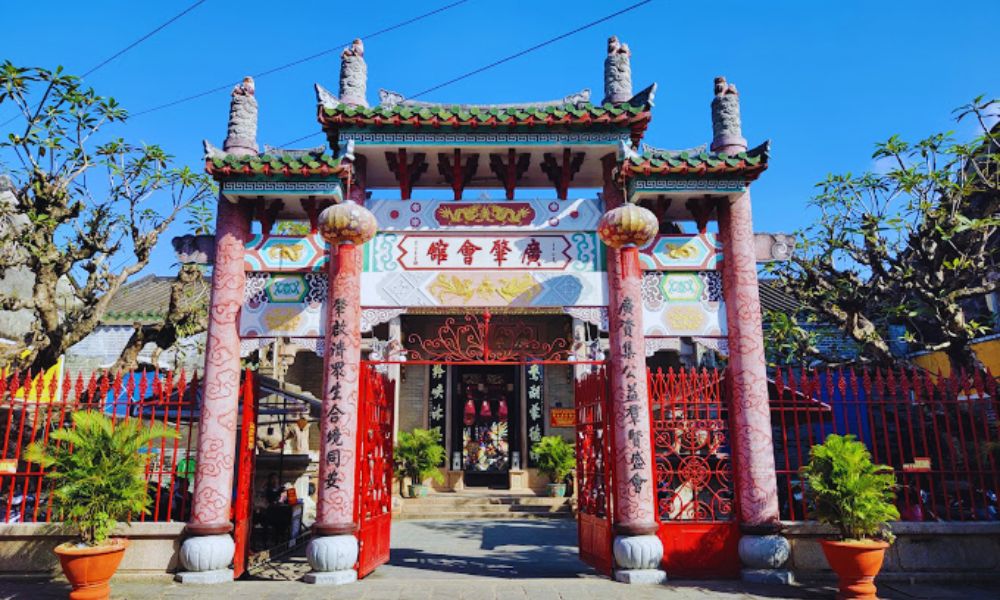
Architecturally, the halls combine Vietnamese town-house layouts with Chinese decorative vocabulary. Visitors typically see courtyards framed by tiled roofs, elaborately carved wooden beams, painted panels, ceramic dragons, and altars dedicated to deities such as Mazu (Thien Hau) or the Heavenly Empress, as well as to ancestors of the community.
Today, these halls are recognised as key elements of Hoi An’s heritage: the Fujian Assembly Hall (Phuc Kien), Cantonese Assembly Hall (Quang Trieu), Chinese Congregation Hall (Trieu Chau) and others form a cluster of living religious and social institutions within the Old Town’s UNESCO core.
How the halls shaped community life
The halls existed to make Hoi An inhabitable for overseas merchant communities, not only profitable. For Fujianese, Cantonese, Hainanese and other groups, an assembly hall offered a place to worship their chosen protective deities, observe festivals, and maintain communal rituals rooted in their home regions. It also functioned as a venue for community decisions: electing leaders, mediating disputes, and organising responses to crises.
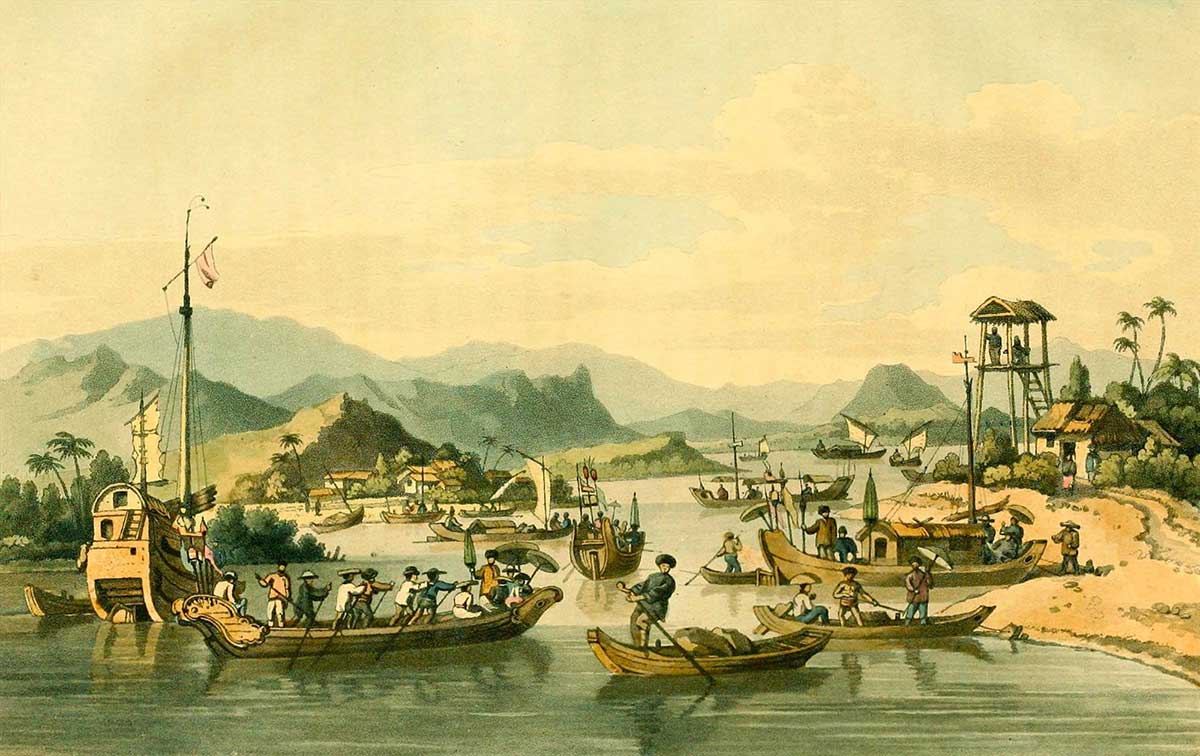
Historically, this mattered because Chinese merchant families formed Hoi An’s most enduring foreign community. While Japanese traders departed in the mid-17th century and European companies closed their posts by the late 18th century, Chinese congregations remained continuously involved in the town’s commerce and governance, often acting as intermediaries between Vietnamese authorities and overseas trade.[^4]
Inside the halls, merchants and their families could pool resources to care for members in difficulty, support funerals and festivals, and provide assistance to new arrivals from their home regions. In effect, each hall was a self-governing institution for a segment of Hoi An’s population, anchored in shared origin and belief.
Where the main halls sit in the Old Town
The assembly halls are concentrated along and near Tran Phu Street, the Old Town’s historic commercial spine. This placement is deliberate: it placed worship, community organisation and business within short walking distance of one another.
- Fujian Assembly Hall (Phuc Kien Hoi Quan): A prominent hall near the eastern end of Tran Phu, dedicated to Mazu and associated with migrants from Fujian.
- Cantonese Assembly Hall (Quang Trieu Hoi Quan): Located closer to the Japanese Covered Bridge, with distinctive dragon mosaics and a focus on martial deities.
- Trieu Chau Assembly Hall (Chinese Congregation Hall): A smaller but significant hall linked to Chaozhou traders.
Visiting several halls along a single walk shows how different communities expressed their identity through architecture and altars while sharing the same urban fabric.
The halls as part of UNESCO’s “fusion of cultures”
When UNESCO inscribed Hoi An Ancient Town in 1999, it did so partly on the basis of criterion (ii): that Hoi An is “an outstanding material example of the fusion of cultures over time within an international trading port.”
Reading a hall as part of this wider fusion helps avoid two common simplifications: treating it as an isolated “Chinese temple” divorced from the town’s life, or blending it into a generic “Asian old town” aesthetic that erases the specific communities that built and sustain it.
How the halls are funded and maintained today
Maintenance of the assembly halls comes from a combination of community contribution and heritage management. Hoi An’s Old Town ticket programme recognises key halls as listed heritage sites, including them in the monument visits that ticket-holders can choose under the 80,000 and 120,000 VND options.
Revenue from ticket sales helps fund conservation and repair, alongside donations collected at altars and community fundraising. Conservation work has to balance structural stability, visitor access and the halls’ ongoing religious function.
Heritage authorities and community leaders work together to plan restorations, often staging work around festival calendars and daily rituals so that conservation does not sever living practice from the building.
How to visit respectfully
Because the assembly halls are active places of worship, respectful behaviour matters as much as sightseeing:
- Treat altars and incense areas as sacred spaces: do not touch offerings or step into restricted zones.
- Keep voices low and avoid blocking worshippers’ movement, especially during rituals or festival days.
- Ask permission before photographing people, and be particularly careful around scenes of prayer, ancestor-veneration or funerary rites.
- Dress in a way that would feel appropriate in any temple or pagoda: shoulders and knees covered is a good baseline.
When in doubt, follow the lead of local visitors: how they move, where they stand, and what they avoid often signals the boundaries that are not written on signs.
Ticket and practical details
Visits to the main assembly halls are covered by Hoi An’s Old Town ticket programme. Under the current 2026 announcement:
- The 80,000 VND ticket includes the general landscape of the Ancient Town, one required monument (the Japanese Covered Bridge or Quan Cong Temple), and two additional monuments chosen from the listed sites.
- The 120,000 VND ticket includes the general landscape, one required monument, one museum, and three additional monuments.
The Fujian and Cantonese assembly halls are among the common choices for these “additional monuments,” so visitors who plan carefully can combine them with one merchant house, one museum and the bridge into a coherent route.
Tickets are valid for up to three days during a stay in Hoi An, and are sold at official booths around the Old Town; walking the streets and using everyday businesses does not require a ticket, but entering designated heritage interiors does.
Experiencing the halls as part of a wider walk
The assembly halls feel more meaningful when visited as part of a route that also includes merchant houses, the market and the river. A practical sequence might be:
- Begin at Chua Cau (Japanese Covered Bridge), then walk east along Tran Phu.
- Enter one assembly hall (often Fujian) and one merchant house.
- Add the Museum of Trade Ceramics or Museum of Sa Huynh Culture to connect architecture with material history.
- Continue to the Central Market and finish along Bach Dang riverside.
This approach treats the halls not as isolated stops but as nodes in a network: places where communities organised themselves within a town shaped by trade.
Frequently asked questions
What are Hoi An's Chinese assembly halls?
They are congregational halls built by Chinese merchant communities from specific regions such as Fujian and Guangdong. They served as places of worship, community organisation and mutual support, rather than simply as historic buildings.
Are the assembly halls still active today?
Yes. They remain active centres of worship and community life for Hoi An’s Hoa residents, with regular rituals, ancestor veneration and community meetings. Visitors should therefore behave as they would in any living religious space.
Do I need a ticket to visit the Chinese assembly halls?
Yes. Visits to the main assembly halls in the Old Town are included in Hoi An’s 80,000 and 120,000 VND Old Town ticket programme. The ticket covers the general landscape, plus a specified number of monument and, on the 120,000 VND option, museum entries. Check the official Hoi An heritage notice before visiting, as ticket arrangements can change.
Source
Hoi An World Cultural Heritage Conservation Center, “The Chinese Assembly Halls in Hoi An – Overview,” local heritage publication.
Hoi An heritage management and community sources describing the role of hoi quan in Hoa merchant life.
Old Town route guidance in "Walking Hoi An's Old Town: A Route Through Merchant History."
Historical accounts of Chinese merchant communities in Hoi An’s trading-port era.
UNESCO World Heritage Centre, “Hoi An Ancient Town,” https://whc.unesco.org/en/list/948/.
Hoi An World Cultural Heritage Conservation Center, “Announcement of the visiting in Hoi An Ancient Town,” 28 January 2026, https://hoianheritage.danang.gov.vn/en/news/news-events/announcement-of-the-visiting-in-hoi-an-ancient-town-125.html.